E-invoicing integration with Odoo for Egypt's ETA and Saudi Arabia's ZATCA
E-invoicing turns every invoice into structured data that the tax authority validates. In Odoo, that means the right tax setup, product codes, customer data, certificates and an integration that handles rejections without blocking your sales.
Yes, Odoo can issue compliant e-invoices for Egypt and Saudi Arabia when it is configured and integrated correctly. In Egypt, registered taxpayers submit invoices to the Egyptian Tax Authority e-invoicing system and, for retail sales, receipts to the e-receipt system. In Saudi Arabia, ZATCA's FATOORA program has a generation phase and an integration phase applied in waves. Which obligations and deadlines apply to you depends on your registration and the notifications you receive, and must be verified with the authority; we handle the system side.
 Odoo
 Python
 PostgreSQL
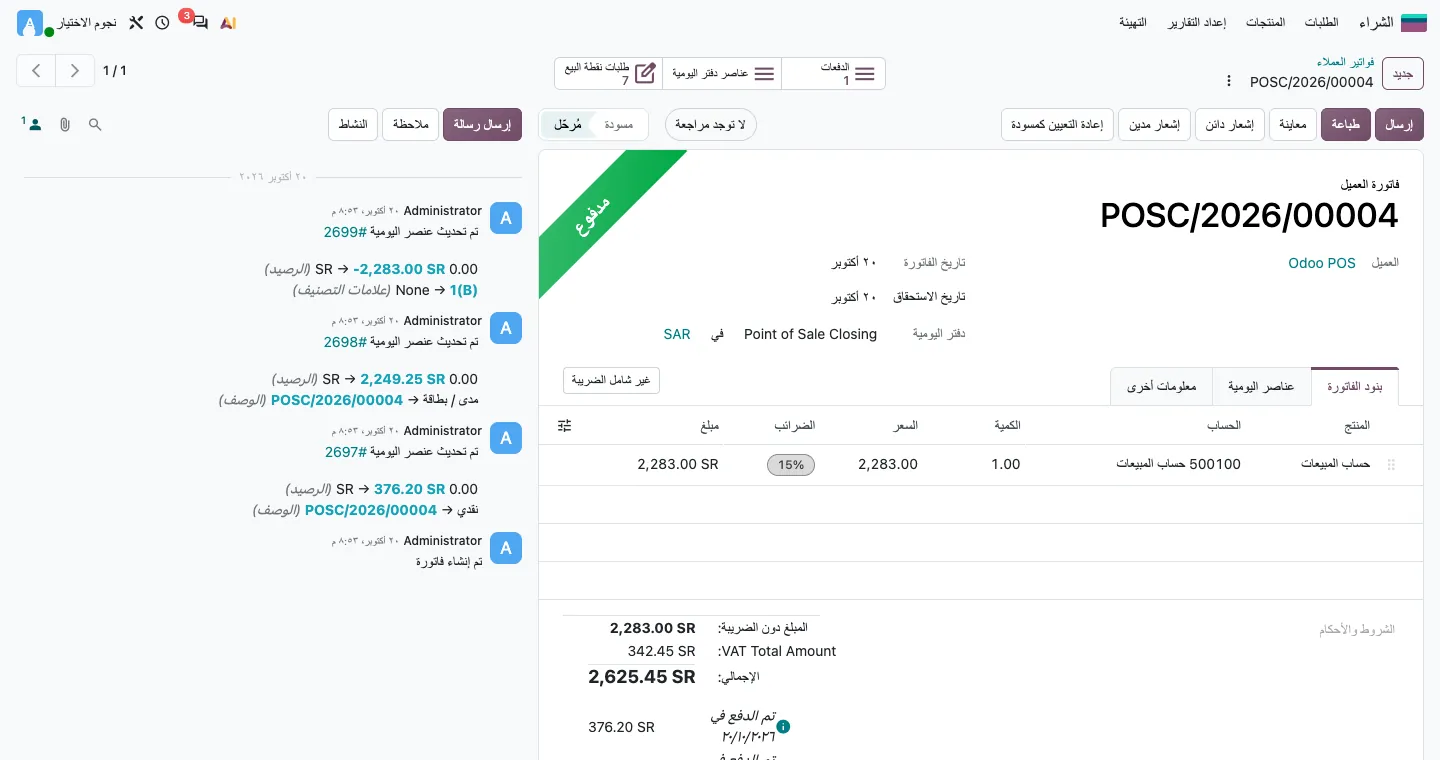
Egypt: ETA e-invoice and e-receipt
The Egyptian Tax Authority runs two related systems. The e-invoice system covers invoices, credit notes and debit notes, mainly between businesses and to government entities. Each document is sent in a structured format, signed with an electronic signature certificate issued to the taxpayer, validated by the authority and assigned a unique identifier. Items must carry registered codes, and customer tax data must be complete.
The e-receipt system covers sales to consumers, typically from point-of-sale. Receipts are issued from registered points of sale and submitted to the authority, and the printed receipt carries the identifiers the system requires. Both systems were rolled out in phases by taxpayer group, so your timeline should be confirmed with the authority.
Saudi Arabia: ZATCA FATOORA phases
Phase 1, the generation phase, requires invoices to be generated and stored electronically with the required fields, and simplified invoices to carry a QR code. Phase 2, the integration phase, connects your system to the FATOORA platform: the solution is onboarded to obtain a cryptographic stamp identifier, invoices are produced in the required XML format, standard tax invoices go through clearance before being shared with the buyer, and simplified invoices are reported within the period set by ZATCA.
ZATCA notifies taxpayers of their Phase 2 wave based on criteria it sets. Requirements are updated from time to time, so we verify the current technical specifications on each project and recommend you confirm your obligations directly with ZATCA or your tax adviser.
How we set up e-invoicing in Odoo
The order matters: most rejections come from data and setup, not from the connection.
Readiness review
We check your Odoo version and edition, tax configuration, customer and product data and invoice volume.
Authority registration items
We guide your team on portal setup, API credentials, and certificates or device onboarding that the authority requires.
Configuration and integration
Localization modules are configured or extended, item codes mapped and tax invoice templates adjusted.
Testing in pre-production
Invoices, credit notes and edge cases are submitted to the authority's test environment where available.
Go-live and monitoring
Production submission starts with a review queue for rejected documents and a named owner.
Data that must be right before go-live
These are the most common causes of rejected documents.
- Company tax registration number and address
- Customer tax IDs and structured addresses for business customers
- Registered item codes mapped to Odoo products
- Correct tax types, rates and exemption reasons
- Units of measure mapped to the authority's codes
- Valid signing certificate or onboarded device
- Credit note process linked to original invoices
- Arabic invoice template meeting required fields
Frequently asked questions
Does Odoo support Egyptian e-invoicing and ZATCA out of the box?
Odoo provides localization modules for Egypt and Saudi Arabia, and support for e-invoicing depends on the version and edition you use. In practice, most companies still need configuration, data mapping, certificate setup and sometimes extensions for their specific documents or POS flow. We assess your version before recommending an approach.
Can e-receipts be issued from Odoo POS?
Yes, with the right integration. The POS configuration, device registration with the authority and receipt layout all have to match the e-receipt requirements, and offline behaviour has to be planned for branches with unstable connectivity.
What happens if the authority rejects an invoice?
The rejection reason is recorded on the document in Odoo and the invoice appears in a review list. Your accountant corrects the data, for example a missing tax ID or item code, and resubmits or issues a corrective document according to the rules.
Do you give tax advice?
No. We implement and integrate the system. Questions about which obligations apply to your company, tax treatment or deadlines should be confirmed with the tax authority or a licensed tax adviser.
We operate in both Egypt and Saudi Arabia. Can one Odoo handle both?
Yes, a multi-company Odoo database can hold an Egyptian and a Saudi company, each with its own localization, taxes, documents and e-invoicing integration, while consolidated reporting stays in one place.
Facing an e-invoicing deadline?
Request a needs-analysis session. We will review your Odoo setup and data readiness and plan the integration and testing steps.